The Ratchet & Clank games today stand on the shoulders of a giant, and that giant is Going Commando. So many of the features which we now consider standard in a Ratchet game originated here. Just to list off a bunch, Going Commando introduced all of these:
- Weapons upgrading through use
- Bolt multiplier in Challenge Mode
- Quick-select pausing the game
- Nanotech burst
- Spherical micro-planets
- Arena challenges
- Dedicated space combat levels
- Strafing!!
Even knowing the limited nature of the original, I thought that maybe with each game in the series, each of these were gradually added in, but I was wrong. By and large, 90% of what mechanically makes a modern Ratchet & Clank game was introduced by Going Commando alone.
For all of these contributions, Going Commando deserves its praises. Fifteen years ago, when I first finished playing through all the Ratchet & Clank games, the common consensus among fans seemed to be that the original game started it all and Going Commando made improvements, but the “best” game in the series was either Up Your Arsenal or one of the Future games. These days, it seems the opinion has swung around, and there’s now a strong contingent arguing that the true crown jewel of the series is either Going Commando, or Deadlocked.
Dialectics of Design
What’s interesting is that those two games being the fan-favorites actually highlights the core dialectical conflict that seems to have pervaded the entire series. Is Ratchet & Clank a platformer with some shooting, or a third person shooter with some platforming?
In the original Ratchet & Clank, you had simple guns which didn’t upgrade, and mainly served as specialized tools you might use to handle particular enemy arrangements in varying level layouts. With the lack of strafing, your limited ability to aim while moving meant that you need to be very methodical in how you attack and how you avoid damage. The weapons were not an arsenal allowing you to switch to whatever you felt like using in the moment; rather, each weapon had a very specific use case, and you’d use the one that best suited that scenario. The Pyrocitor flamethrower could be used while spinning to quickly dispatch a lot of weak, swarming enemies. The Agents of Doom could be thrown into a room packed with enemies while you take cover and watch them thin the opposition, making it easier for you to storm in and pick off the rest. The Blaster was useless on any moving platform, but it let you snipe the tougher flying enemies that your other weapons couldn’t target. It was a level-design first approach, where combat was more of a puzzle to be solved, just another challenge among the various ones that planet threw at you.
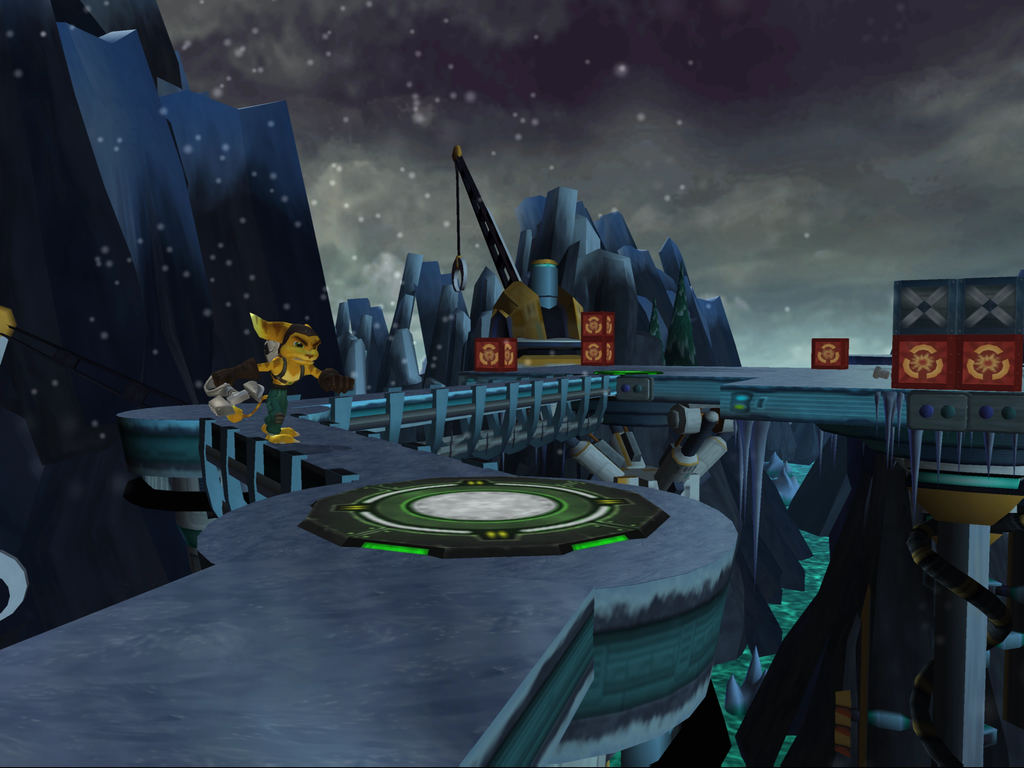
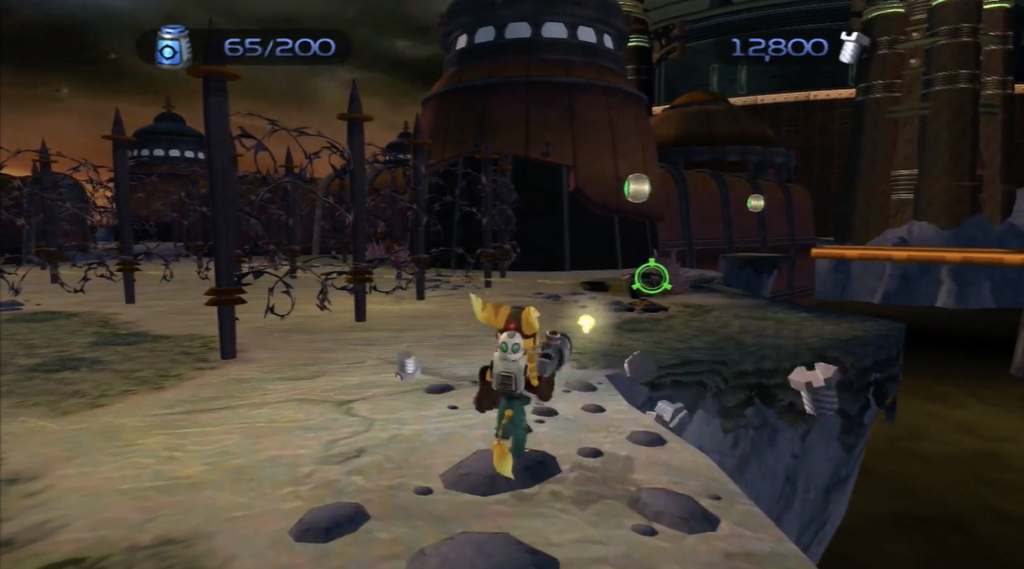
You can see an interplay between the weapons and the encounter design as a result. The limited effectiveness of the weapons meant that your positioning and dodging were always key, encouraging skillful movement and jumping. The weapons not being easy to use meant even the combat was testing your platforming ability, and the designs lean into this by giving you some pretty tough platforming to manage while dispatching otherwise simple enemies. Consider how Hoven has you navigating dangerously slippery ice narrows while trying to avoid getting shot off by enemies or exploding crates, or how Umbris has you weaving through a series of barbed wire fences to close in on a turret which is shooting at you the entire time.
From Up Your Arsenal onwards, the weapons were much stronger and versatile, and the physical terrain of the combat encounters become much sparser, usually just being one or two pieces of cover on a flat battleground.
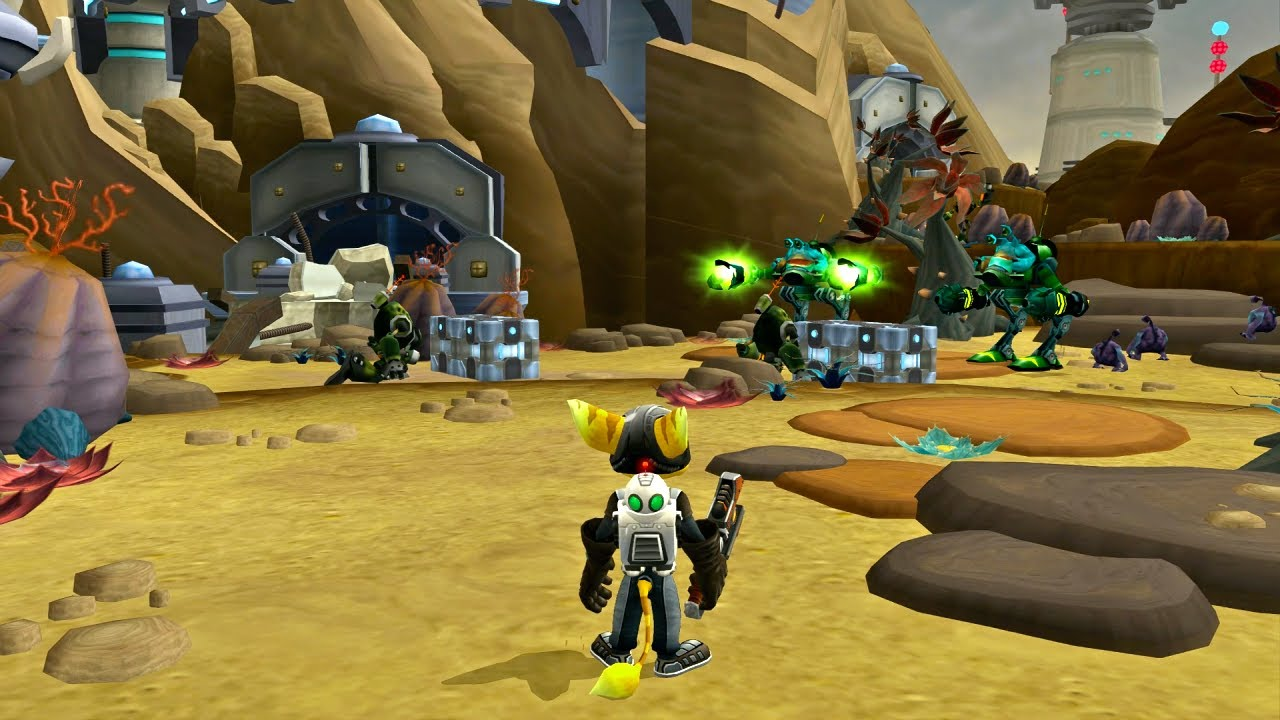
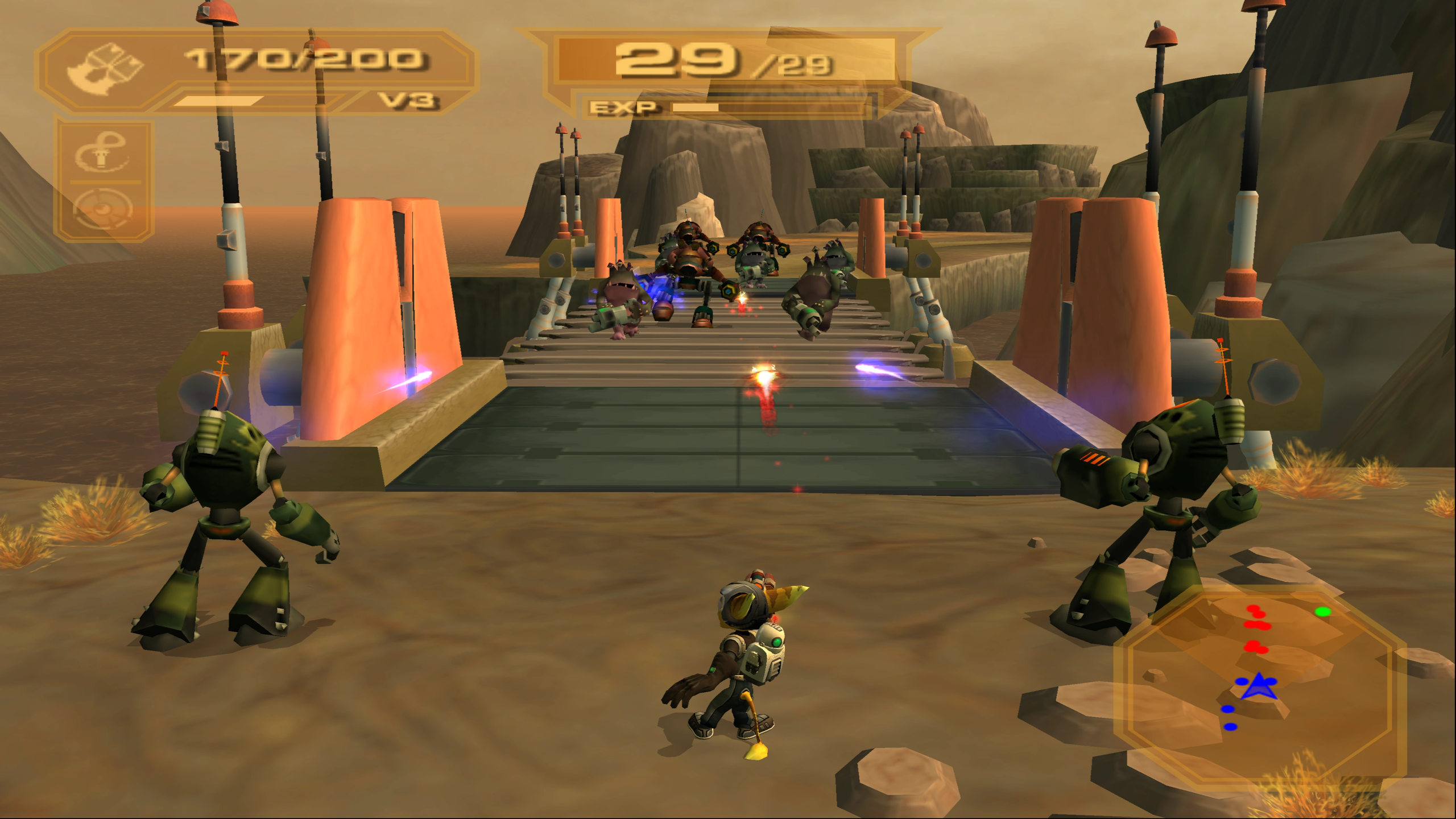
The simpler layout of battle encounters meant it was essentially a shooting gallery, and the effectiveness of each weapon meant combat was no longer a lock-and-key puzzle but rather an expressive dance where you are dodging enemy attacks while firing back with whatever set of explosive weapons you feel like using in the moment. Where combat in the original was just another obstacle to be reasoned about and navigated, it instead became the meat-and-potatoes in UYA, the main focus and spectacle of the game. Platforming starts to take a backseat to the destruction and mayhem. As a matter of fact, UYA doesn’t even have any grind-rail sections! One of the most identifiable Ratchet platforming components was entirely missing, and while that could be due to the rushed timeline for the game’s development, it ends up also being an interesting case study on how the games changed over time.
Going Commando finds itself at the meeting point of these two dialectical forces. For many, this is exactly why it is great. It has a much stronger set of weapons than the original, and introduces strafing, meaning it is much easier to enter a combat scenario and reliably target enemies while also constantly avoiding damage by jumping. This game absolutely sets the template moving forward for how it should feel to fire a gun or throw a bomb in a Ratchet game. The core gameplay loop of Ratchet game to me is “hold strafe and fire a gun at the enemies, while side-jumping to avoid damage; switch weapons when you run out of ammo.” We have arrived at that formula in this entry, and we will not deviate much from it moving forward in the series.
At the same time, the layouts of environments still have that character and “belongingness” of the first game. The combat room designs don’t feel purely utilitarian the way they sometimes do in UYA. The platforms and obstacles here fit the planet and feel diegetic, rather than constructed just as layout for the player to fight in.
However, you can see these elements we’ve discussed extend further outwards from individual encounters to influence the design of the entire planets themselves. The shifting emphasis from platforming to combat as the series progresses causes a resultant shift from a branching-path design in these games to a more linear planet design from here on.
In the first two games, as soon as you land on a planet, you’d be presented with 2 to 4 distinct paths to take, each having its own distinct set of challenges. Path 1 might be a combat-based gauntlet, Path 2 is a puzzle-solving path involving a gadget, Path 3 is a platforming course, and maybe Path 4 is for an optional item or side-quest. Of course, you won’t know which path is which until you follow them to the end. As an example, let’s take Planet Oozla from Going Commando.
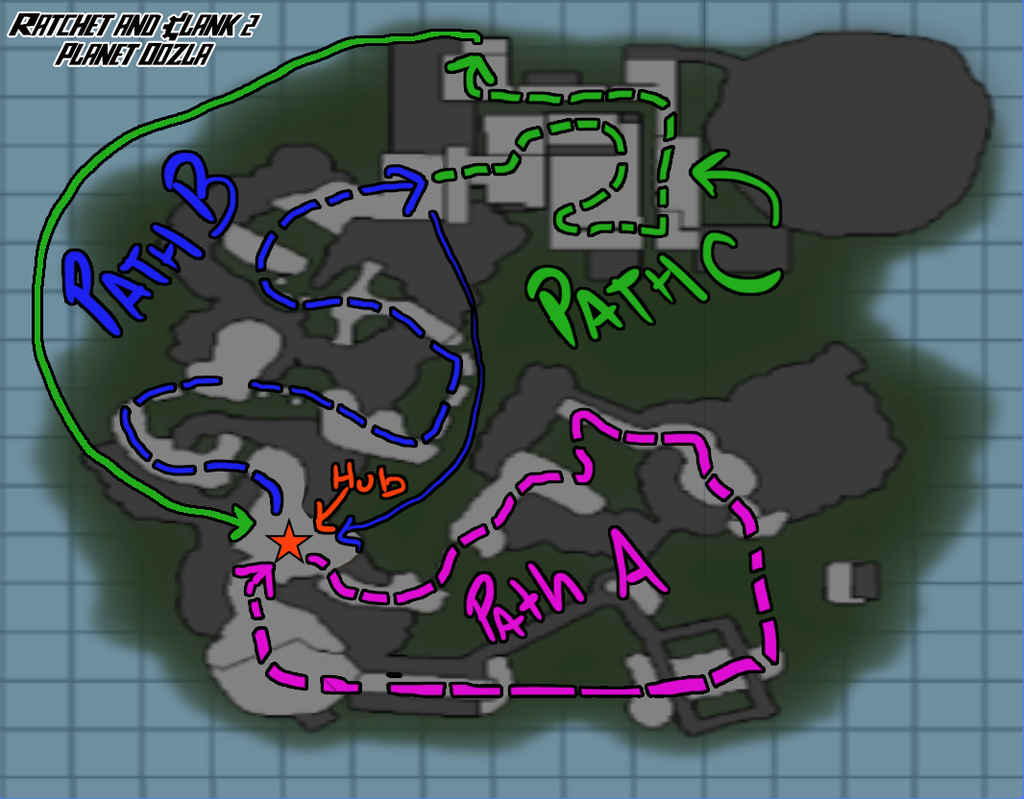
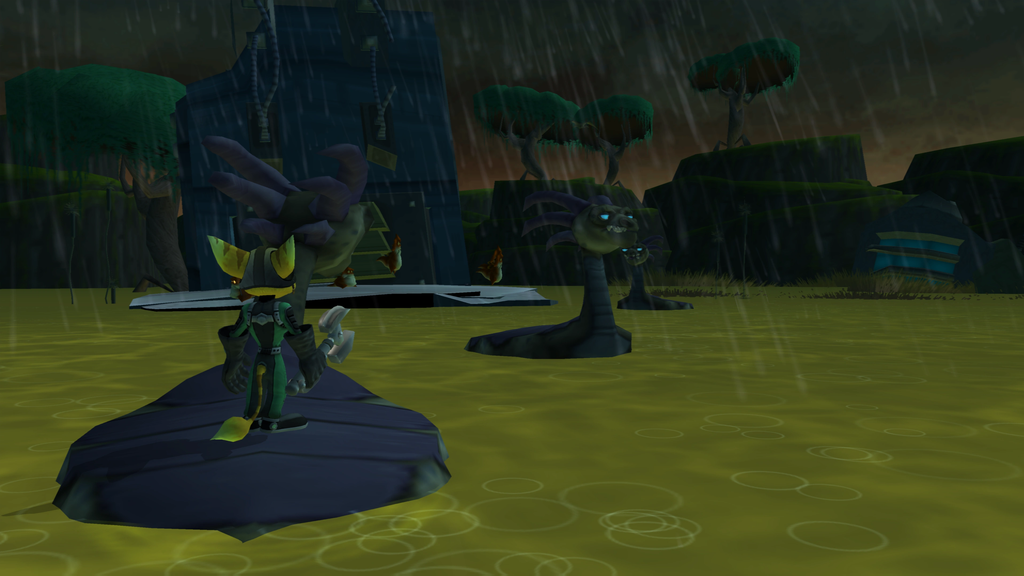
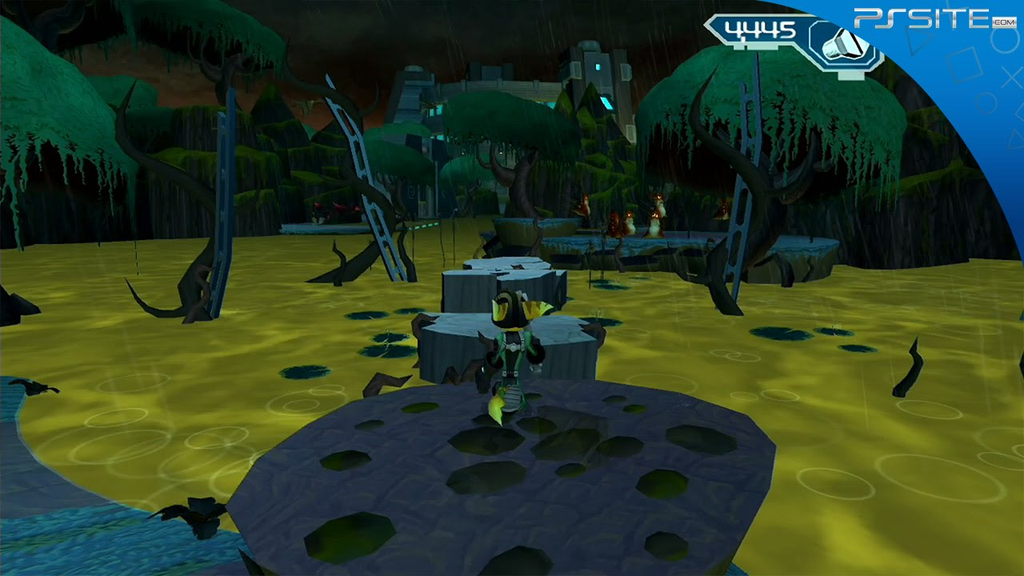
One path takes you through a series of water bodies you need to cross by jumping on the backs of these Lapras-like swamp creatures, and eventually gets you to the Dynamo gadget and the Megacorp Outlet entrance. Another path involves fighting hostile swamp creatures on the way to a stranded Megacorp scientist who gives you the Tractor Beam. The third path then requires this Tractor Beam to gain entry into the Megacorp Outlet. Depending on the order you do them in, you might even need to backtrack once you have the necessary gadgets.
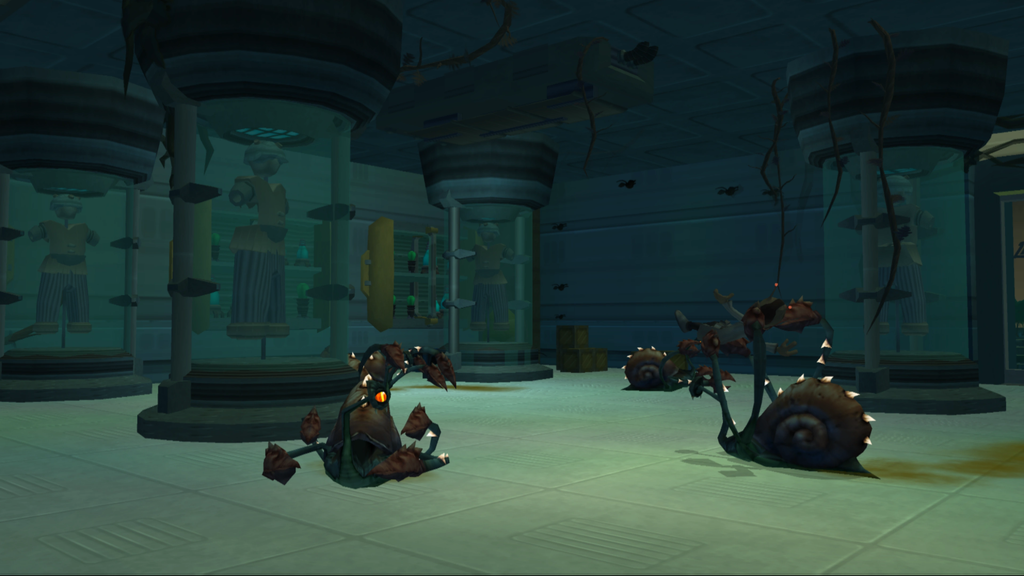
In the original game and in this game, this is the norm. Just about every level presents you with at least two paths, and you never know which one leads where until you traverse them. After Going Commando, the series took a much more linear approach to planet designs. You’d now head down a single path, be confronted by a cohort of enemies, and cycle through your weapons and unleash mayhem on them, strafing and jumping along in a series of explosions, then do it again. You go from Point A to Point B to Point C to the end of the level, exactly in that order.
Take a look at the map for Metropolis in UYA, a returning city from the first game which is now re-designed. In this new iteration, it’s a single path, thoroughly packed with tough enemies for you to unload your weapons on. I chose this level to examine especially because it is one that previously had multiple paths in the original game.
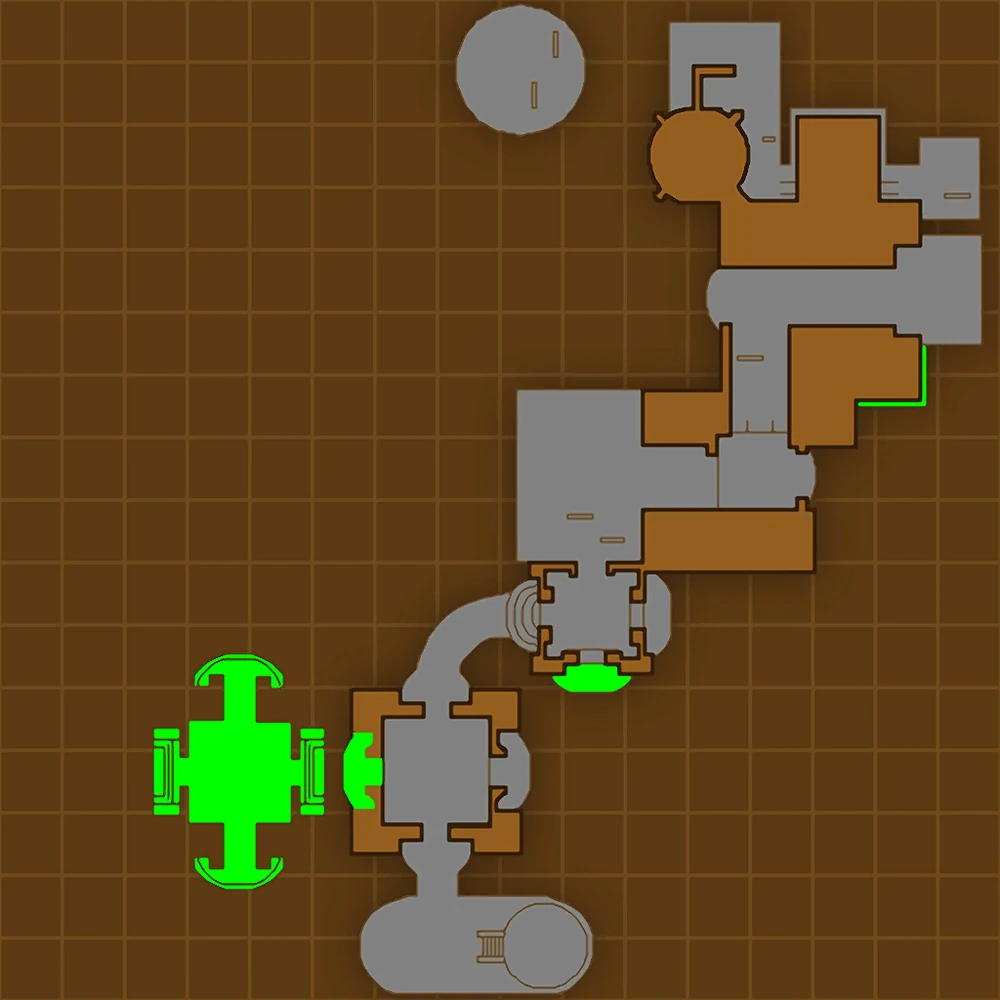
Now, the point here is not to say one design is better than the other. In fact, each style of level design reinforces the gameplay focus it is paired with. The branching path design accentuates the puzzle-platformer approach of its games by presenting the player with two or three different sets of platforming courses and enemy placements within the same planet’s aesthetic, testing how the player can adapt the skills they’ve practiced to these different looks. On Oozla, one path tests how well you’re able to jump across small streams to the next piece of solid land while fighting off the snail and crab enemies that jump out to surprise you. In a second path, you are tested on jumping from one moving platform to another moving platform, all while keeping an eye out for hidden side paths with extra goodies to collect. Then, the last path tests your ability to do all those previous things, but now also combining them with the usage of the Dynamo and Tractor Beam devices to activate and position new platforms to jump on. By the end of Oozla, you’ve demonstrated your ability to string together at least three different platforming mechanics while still shifting smoothly into simple gunplay between each platforming challenge.
In contrast, UYA and Deadlocked want to test your combat abilities. How well can you bob and weave through incoming enemy projectiles and melee attacks, while also strategically deploying your own passive turret and minion weapons in conjunction with your active firing weapon? The flat terrain and basic cover within combat rooms is meaningfully sparse, a blank canvas presenting you the freedom to choose how you want to set yourself up in that arena.
This linear level design then gives the designers the control to chain these rooms into a meticulously-tuned sequence of encounters. The developers know you will enter Encounter 1 first, then Encounter 2 and 3 and 4, in that order. You are not going to Path 1, then back to the hub to reload and regroup, then Path 2; the linear level design enforces continuity. This means they can test how well you manage your ammo throughout the gauntlet, how well you choose which weapons to save for the end and which ones you use immediately, and how well you manage your health throughout it all. The platforming now serves as a small respite between these encounters, allowing you to take stock of your health and ammo, or just admire the scenery for a second before jumping back into the action.
Once again, Going Commando finds itself in that comfortable meeting point of these two planet-design philosophies. Yes, Oozla has multiple paths testing different platforming abilities, but you still get these battle gauntlets in planets like Yeedil and Snivelak. Sometimes, even within the same path on a planet, you get both a battle gauntlet AND a platforming gauntlet (e.g. Planet Barlow). Within the boss fights, GC provides that large boss health bar to fully throw all your weapons at, while simultaneously requiring you to platform to keep your own health bar up. Both types of fans are able to get their fix here in spades.
And this point about linearity isn’t just on the scale of paths within a single planet — the same non-linearity presents itself across the planets as well. With the focus being on exploration over simple linear progression, it makes sense that this philosophy extends outward to the galactic scale. In GC and Ratchet 1, you might go down one path on a planet, and find out halfway through that you’re blocked because you don’t have a specific gadget which would allow you to continue. You would then leave and explore a different planet to acquire that gadget, and be sent on this mini Metroidvania-style backtracking side-quest, unlocking areas of planets you already visited. In UYA, where the plot is more about liberating war-torn planets from Nefarious’ forces, you’re given no real reason to revisit a prior planet beyond rounding up any collectibles you might’ve missed — you’ve already saved that planet from the Tyhrranoids, so your mission is complete. Going Commando is the last game where we see this kind of backtracking pattern, again making it this transitory game where we see the franchise shifting from its initial form to its current one.
Ultimately, you can see inside Going Commando the DNA of the original refined and polished, but also the seeds of what came after. The non-linear level design of the original exists alongside the expanded arsenal and mechanical depth of the later games. So, the best of both worlds, right?
Bigger, and Better?
Unfortunately, I think this hybrid state is a gift and a curse for Going Commando. When it came out, it was absolutely “bigger and better” in every single way. The worlds were larger and more complex, the weapon arsenal was more expansive and varied, and there are all sorts of QOL improvements across all mechanics. All the weapons from the original game return alongside the new ones. There’s two battle arenas, multiple space ship combat sections, and you can even upgrade your ship now. Awesome!
But that’s looking at it solely from what it was when it came out. The problem with playing it now is that every single thing it introduced has now become so thoroughly characteristic of Ratchet & Clank as a series that the game no longer feels unique for having them. All the elements the game added are now standards, so going back to play Going Commando leads instead to a comparison of those elements in this game against those elements in the rest of the games.
Sadly, when compared, this game can’t be said to do any of those individual things better than other games. If you want a breadth of weapons and a depth in mechanics, UYA has an five-level upgrade system that modifies the weapon meaningfully at each level, and Deadlocked has a weapon mod system introducing more customization and tactics than any other game in the series. If you want the non-linear levels with puzzle-like weapons and anti-capitalist satire, the original is your best bet. If you want story-telling, the Future series easily clears this one.
Going Commando is truly a jack of all trades, master of none. Which is a very sad and unfair thing to say, because it pretty much invented most of those trades. It laid something like 80% of the groundwork for the whole series, to the point where every game after can just be viewed as fine-tuning one thing or another. But ultimately, everything that could make GC special is now done better in another game, leaving GC as just a very good Ratchet game. It’s quite complete, but there’s no singular element that makes me want to come back specifically to this one.
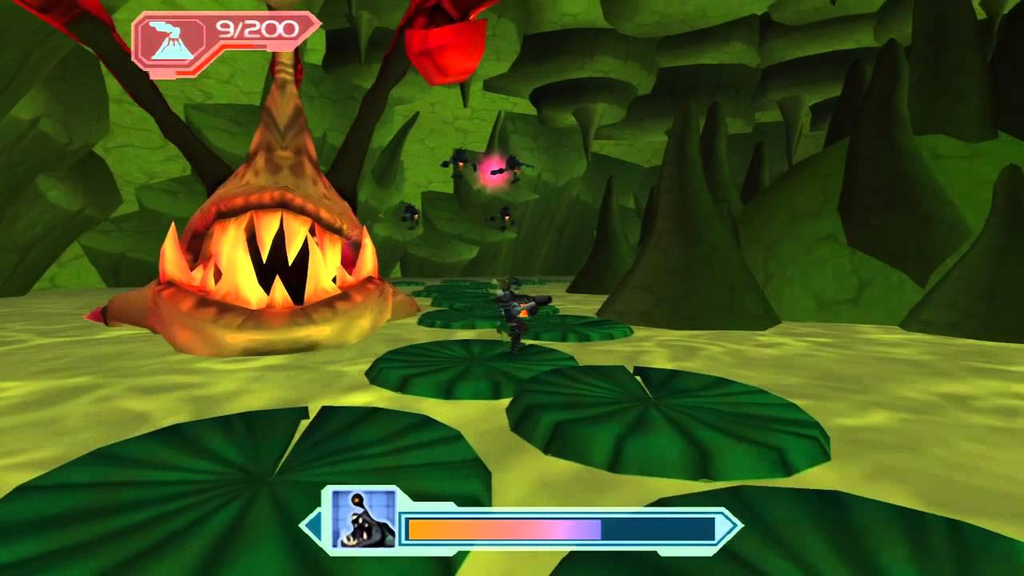
Now, the impact of the jack-of-all-trades nature of the game is two-pronged. It doesn’t only fall short when compared to other games who did one of the trades better. Within this game itself, you can see the dialectical conflict between combat and platforming fraying the seams of this otherwise well-stitched game, because the same non-linearity sharpens the impact of this conflict. In the same Swamp Monster battle we discussed before, there’s a small hitch that is introduced by letting the player choose when to backtrack to do this battle. If you fight it when your weapons are strong enough, you can likely deplete the monster’s health bar faster than it can realistically endanger you, so the strength of the weapons can effectively make the platforming from lily pad to lily pad unnecessary.
In the original game, the weapons never got strong enough to allow you to stand in one spot and unload without dying. In UYA, the weapons are much stronger, but even the basic enemies do enough damage to kill you in a few hits. By fully committing to one philosophy or the other, both games allow their chosen gameplay element to reach their full potential. GC is gifted by its hybrid nature by presenting you with both, but it is simultaneously cursed by it because each element can at times undercut the other.
Let’s not lose sight of the context of this game however. This is not Going Commando attempting to build a best-of-both-worlds game and falling short. This game came before UYA, so there were not two distinct models of design yet to even consider synthesizing. Rather, GC is a noble effort to expand upon the original in every facet. Improved maneuverability a la the strafing controls, more fluid movement and gadget use, more weapons, and bigger levels. This is exactly what every sequel should attempt to do, and GC is a quantitative success for being able to do it all as well as it did. The making of this game was an additive process, and only once the entire chassis of the vehicle is constructed can a designer then pay specific attention to what can be tuned, what can be removed, and what can be reimagined. It is well-known that GC wasn’t even completed by the time development on UYA began — so the criticisms I have here were likely entirely noticed by Insomniac prior to release and actively being designed against in the sequel. So, none of these conflicts are failures by the developers; rather, this game needed to be built in order to even start having these discussions about what fits perfectly and what can be tailored.
Building such a monumental expansion of a sequel in a year of development is not only hard, it’s damn near impossible, and Insomniac pulled it off. And where a lesser developer might have rested on their laurels, Insomniac immediately began taking note of what can be improved and what might need more attention in future titles. In the next section, I’d like to point out a few of those rough edges which stuck out to me in this game.
The Cost of Crunch
When a studio is rushing to expand the universe to include space combat, battle arenas, new weapon mechanics, and new movement all at once, naturally a few other components might then receive less attention than ideal. Let’s look at a few of these places where I feel the massive expansion in the skeleton of what it means to be a Ratchet game might have led to the outer detailing being a bit lacking.
The levels in Going Commando are well-designed, but aesthetically, I find them very unmemorable. There are too many levels here that are factory/city themed and they all blend together in my memory as one uniform grey-blue metallic blur.
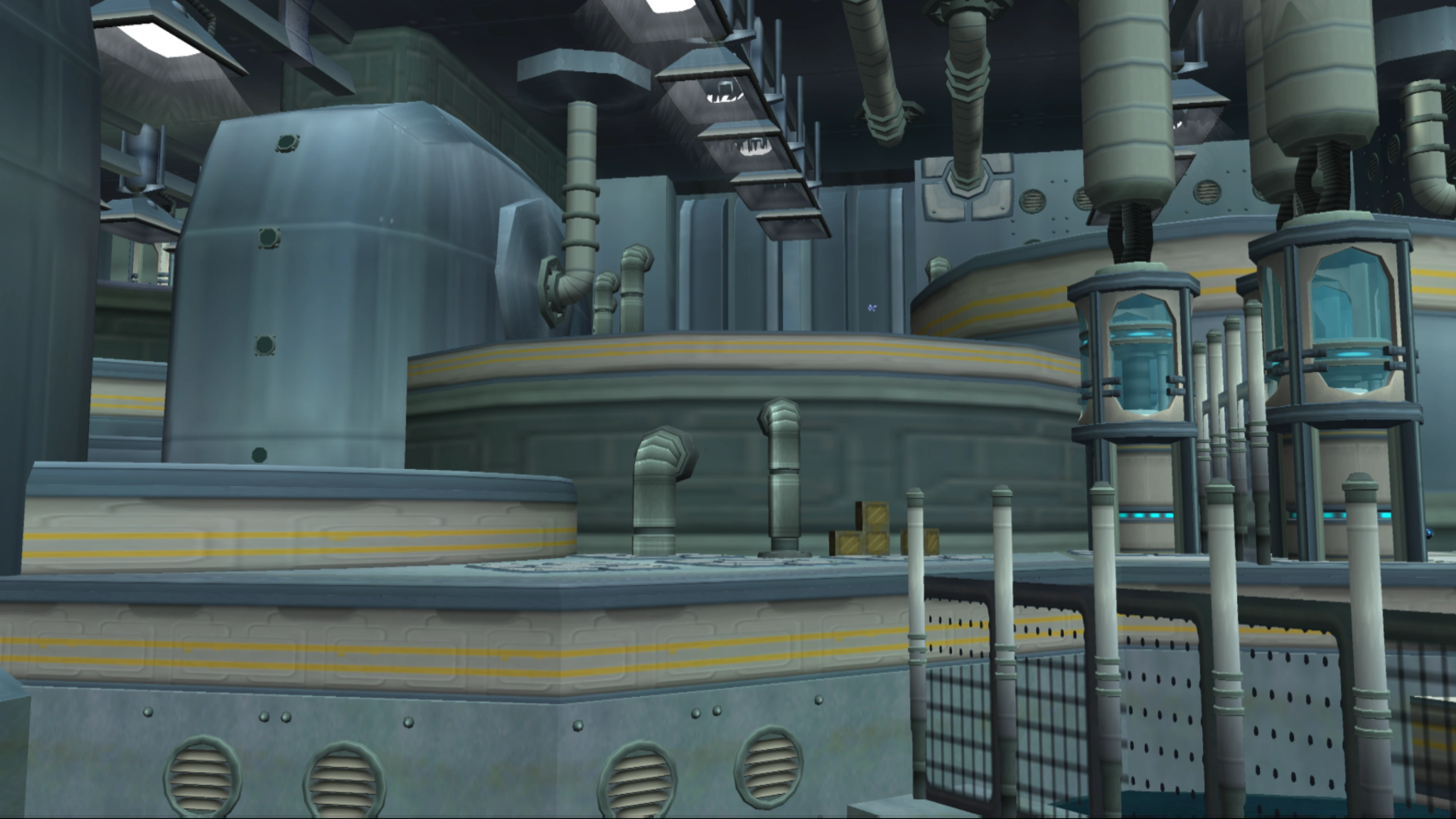
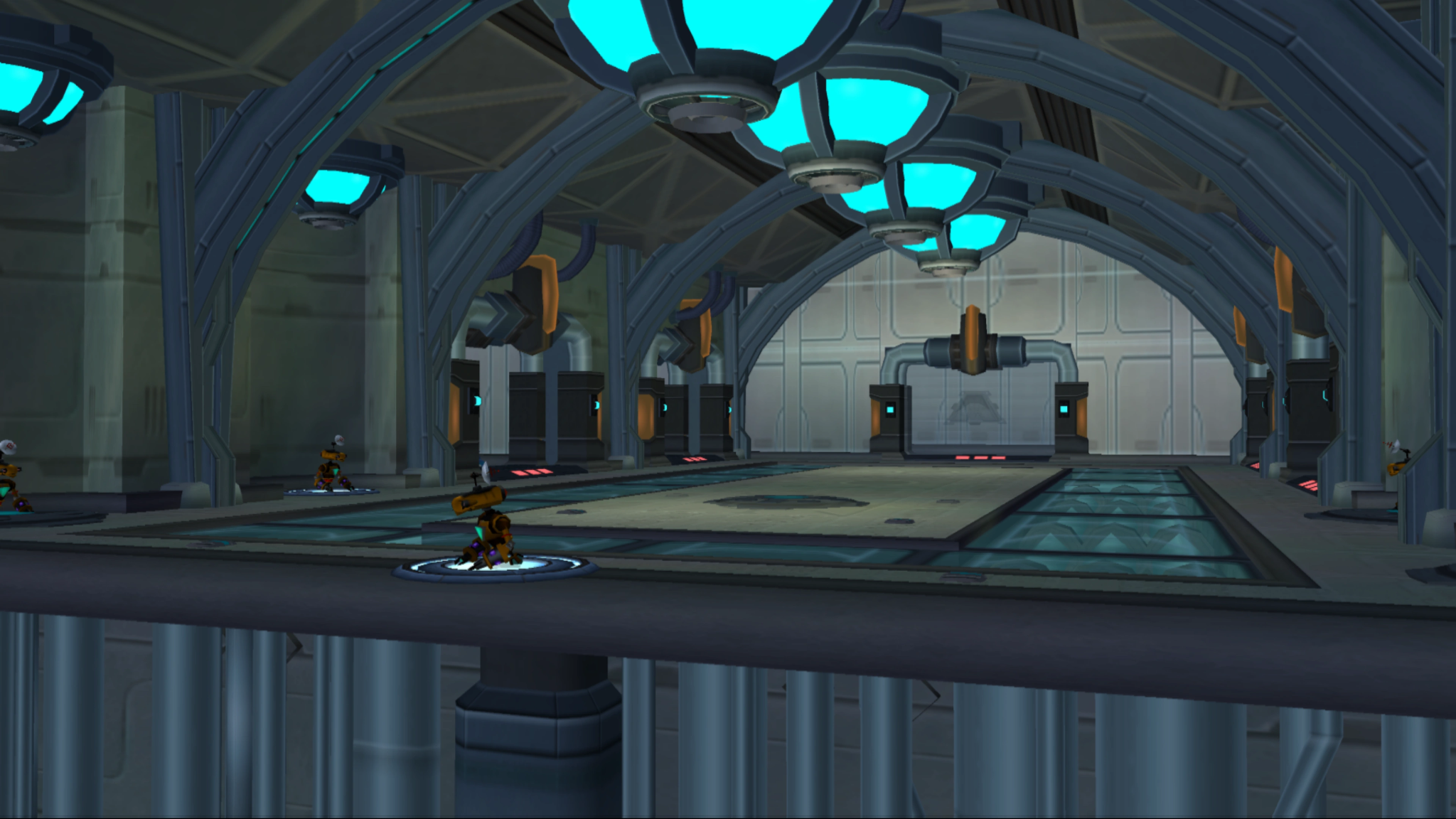
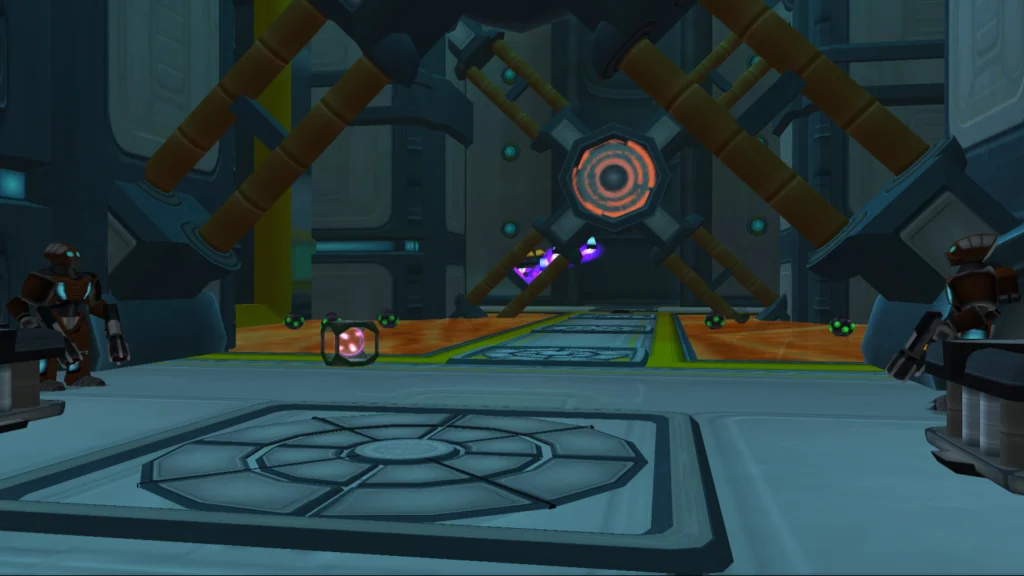
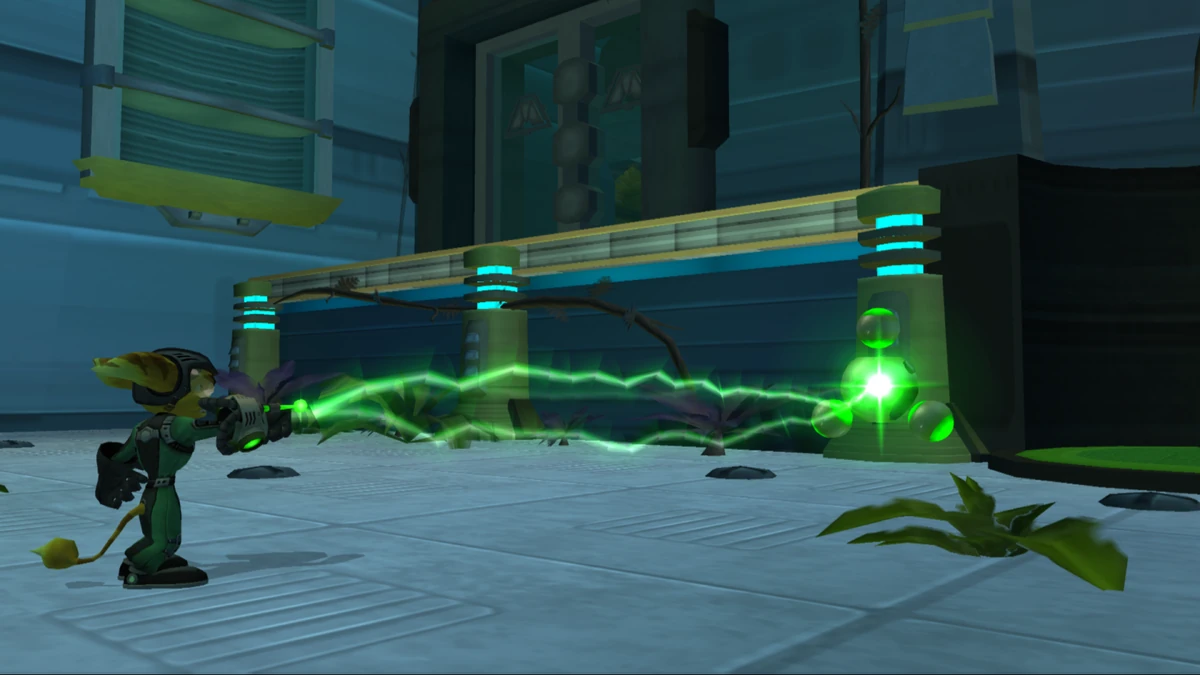
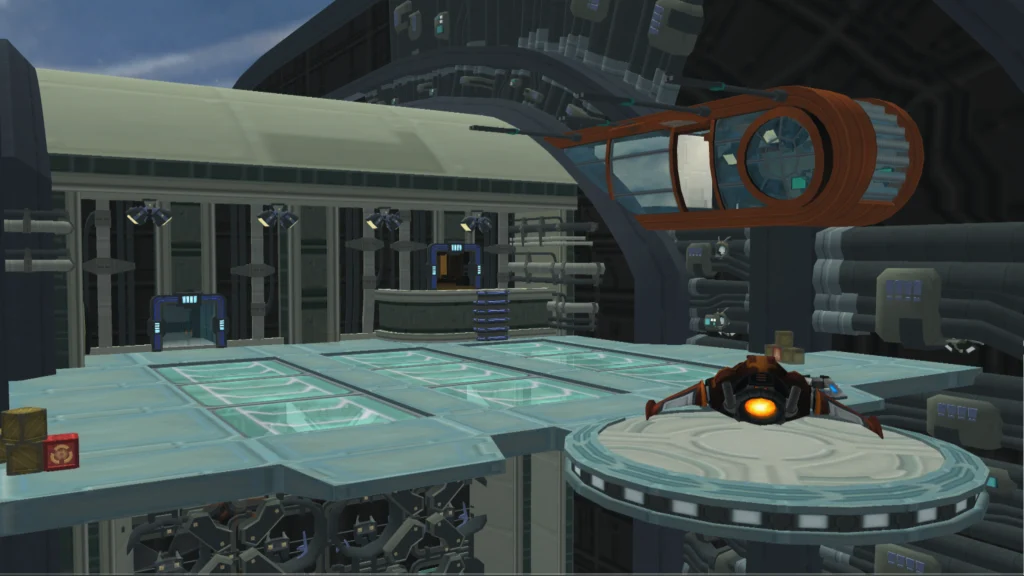
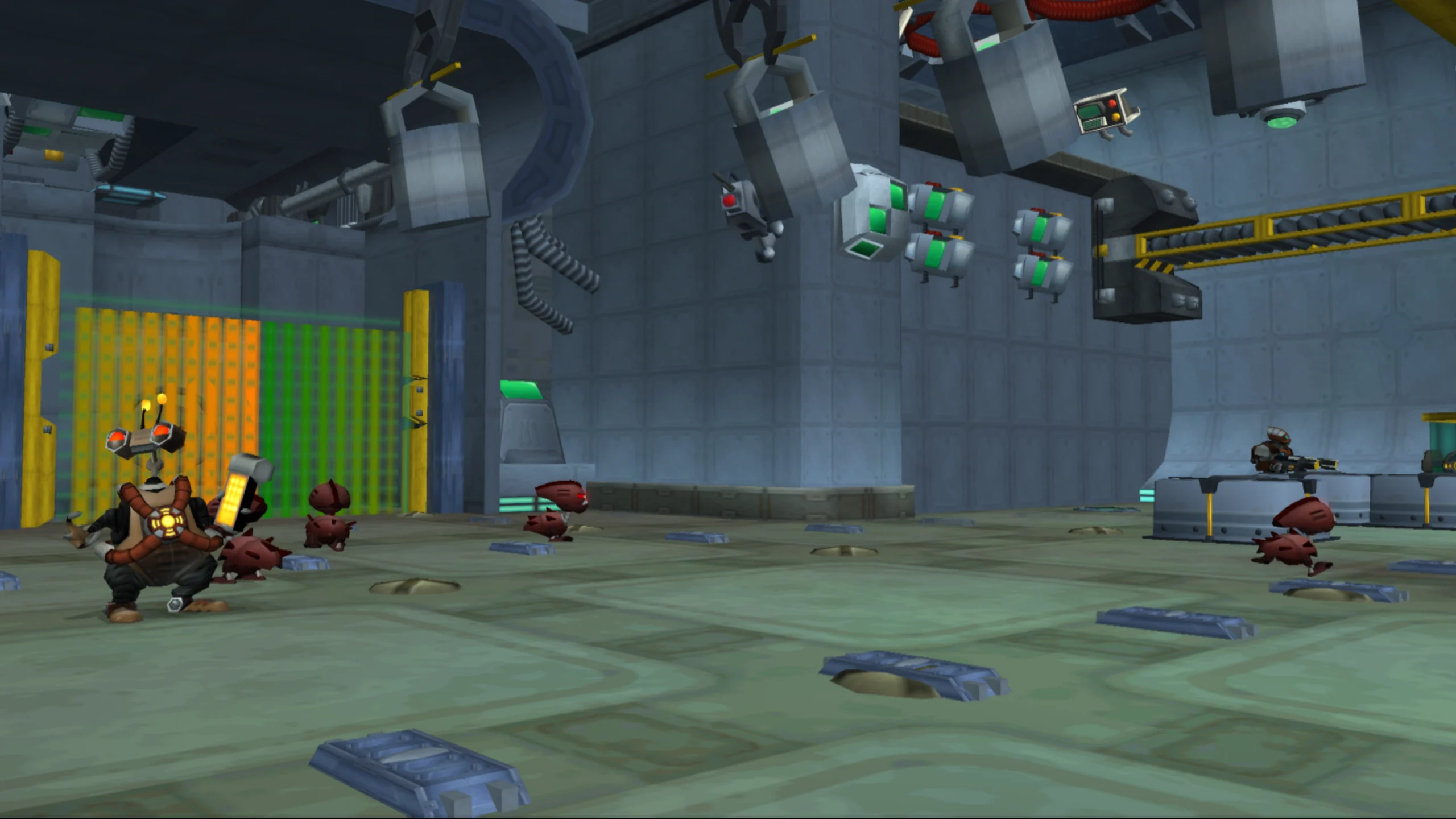
Snivelak, Boldan, and Endako aren’t of the same color pallet as these, but nonetheless also feel like riffs on the same industrial or urban setting. Aside from the industrial setting, there are two different snow-themed planets as well, and honestly, Siberius entirely escapes my memory most of the time until I remember it was the home to the train chase section.
The levels in GC which do stick in my memory are Joba, Dobbo, and Oozla, mainly because they have a splash of color by comparison.
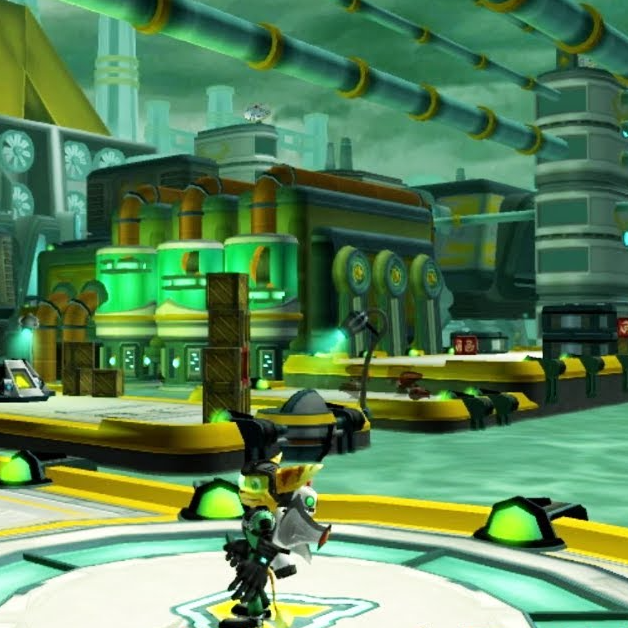
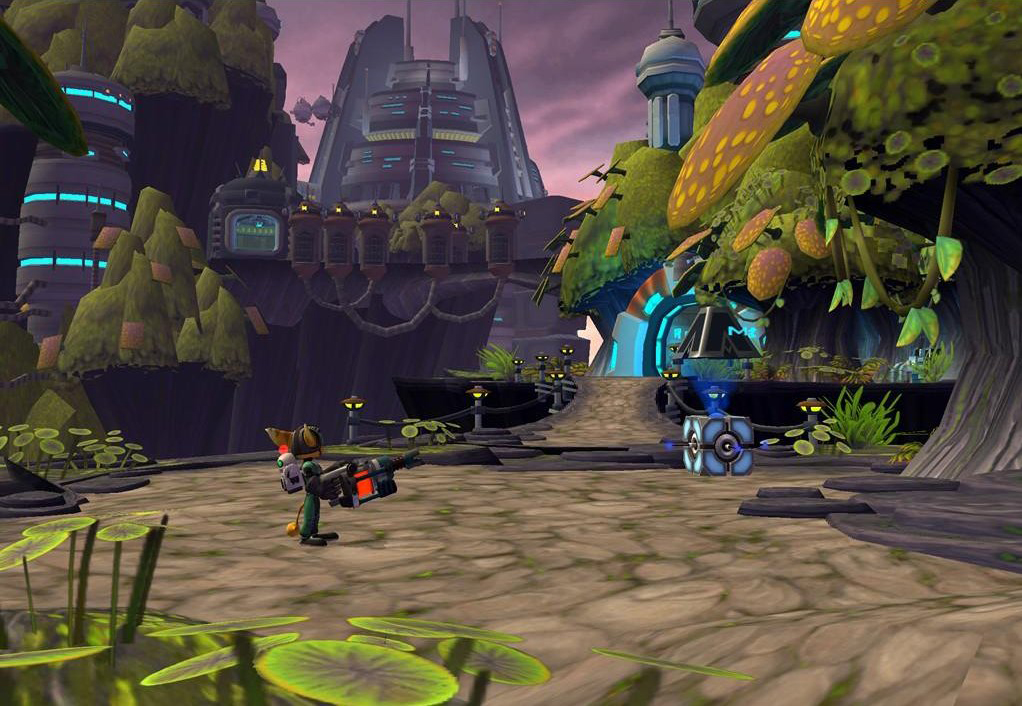
There are two “collect crystals” levels. The ship segments IMO are not that fun and when paired with the crystal levels, they bring the pacing of the game to a halt. Even though they might be useful for farming and leveling up weapons, I ALWAYS go “aw man” when the game decides to break my forward momentum with one of these forced diversions — I just want to get to the next planet and explore. In contrast, I think UYA shows us how an open level design can work better, and then the Future games and Rift Apart knock that out of the park. A Crack In Time also has ship segments that feel much better to me, but that’s mainly because they aren’t just dogfights and instead the ship itself becomes a vehicle of transportation (shocking!) that let’s you explore the space between planets and physically control your flight to the next planet.
As a whole though, I think GC might have the worst selection of levels; they are just mostly forgettable aesthetically, and the few mechanically interesting levels like the Aranos Flying Lab and the Distribution Facility on Smolg are offset by these mechanically tedious crystal/ship levels. In contrast, I feel the original game has iconic level after iconic level, all with such lush aesthetic design and mechanical variance, making them each distinct and personable.
I actually think there’s a good reason why these crystal farming levels needed to exist, and it has a lot to do with the aforementioned weapon balancing. The late-game has a pretty stingy XP and bolt economy, and as a result, these two crystal levels feel like a pressure release valve, giving you a dry but effective way to get your weapons leveled up enough to still pull their weight against the absolute onslaughts of difficult enemies you face in the late game.
Furthermore, the strain on XP meant I always felt pressure to use a weapon only enough to upgrade it, then immediately stash it away and switch to another weapon to ensure I get XP on it. Weapons reach their strongest form then immediately get discarded to avoid wasting XP that could go to weaker weapons, ironically meaning that the final uber-powerful version of the weapon gets used the least. You ultimately feel like you have less freedom in which weapon you use, even though the entire point of overhauling the weapon system was to give you an arsenal full of killer weapons to use as you please. My combat experience therefore became less expressive and more utilitarian and restricted.
However, this is the most double-edged sword mechanically in the game, and leaves me conflicted. The XP strain brings with it a series of wonderful impacts on how the game plays out. This stinginess in XP gives the game a level of challenge that later games can’t match. The game shines in this challenge, because it makes it so there are sections where you genuinely need to use all your weapons, even the upgraded ones. This sometimes did spill over into frustration for me, but I can hand-wave that as a result of me trying to 100% the game and optimally upgrade all my guns.
The bolt multiplier this game introduces into the Challenge Mode further alters how I evaluate the weapon XP grind. Maybe we should not expect to get all our weapons leveled up, and maybe our weapons being a bit weak against the hordes in the final levels is intended. Maybe it should be hard, so that then we reach Challenge Mode, we are already equipped with the dodging ability and weapon familiarity that lets us rack up 20x multipliers with ease. And when we’re earning 20x bolts, we can start affording all the upgrades we want. And most importantly, Challenge Mode’s bolt multiplier solves that prior issue of upgraded weapons becoming unused — you are actively encouraged to use your strongest weapons so that you can kill enemies more efficiently and avoid taking damage. You can then use bolts instead of XP to directly upgrade your weapon to the Challenge-Mode-exclusive Ultra versions.
This shift in player psychology — where you stop focusing on merely surviving battles and start ruthlessly optimizing your bolt multiplier just to buy expensive Megacorp upgrades — mirrors the exact thematic core of Going Commando’s narrative. The plot itself is a relatively trite affair — mostly uninteresting characters, an insignificant impact to the overarching narrative of the series, bland and stunted pacing, Angela is introduced and pretty much dumped immediately after this game with no explanation, Qwark’s betrayal is hardly mentioned again — but the corporate satire surrounding it all is where the game’s story shows genuine character. Qwark and the Proto-pet might be the villains on the surface, but visiting each planet and seeing the wanton disregard that corporations show in their exploitation of people and planets makes it very clear the actual villain of the game is Megacorp itself. I didn’t think I’d hear such vocal criticism of capitalism from PS2 game, even going to the extent of accusing Ratchet of being an errand-boy for Megacorp’s “imperialistic eco-fascism”. Absolute W in my book. This corporate satire is even cleverly reflected in how the game handles your legacy arsenal. While you can import your weapons from the original game for free, they are almost entirely useless. It functions as a brilliant piece of mechanical storytelling—an intentional commentary on how these Gadgetron weapons essentially junk, made utterly obsolete by the relentless march of Megacorp’s consumer weapons technology.
I really do love this anti-capitalist critique that the game makes, but it’s unfortunate that the same character and inspiration doesn’t shine through in the game’s level aesthetics. Many would argue that the levels all look so industrial and similar because they are all impacted by Megacorp’s seemingly inescapable reach; that may well make sense, but the levels still feel dry nonetheless. When I reflect on a Ratchet game I haven’t played in a while, I always do so by visualizing the levels and how it felt to explore them. I feel when it comes to Going Commando, that visualization is just a non-distinct blue-grey factory interior. This game’s palette is just very dull, which isn’t what I want in a platformer, and especially not for Ratchet.
In comparison to the rest of the series, I just feel like this game aesthetically and narratively falls short. It invested a lot in mechanics and that definitely paid off, but I’d describe Going Commando as doing all the ground-work yet being out-shined in each aspect by other games. The skeleton is fully functional, but the later games have better outfits on. It’s undeniably a classic, but like many classics, the ground-breaking features that made it influential are now so standard and expected that this game stops being unique because of them. I have fun when I’m playing Going Commando, but these days I think I’d return to most other games in the series before I come back to this one.